Silica crystals continued, or yarn weight and humidity

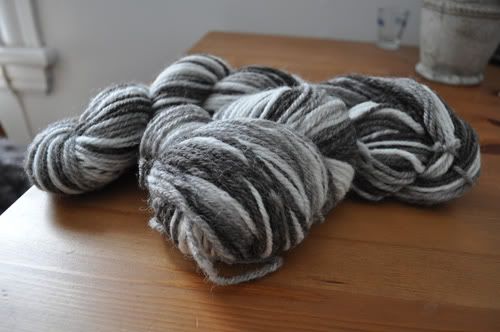
It’s a week since I decided to test how much moisture could be pulled out of a skein of yarn by sealing it up with desiccant. Today I pulled out the skein and weighed it, and it was right at 2 oz. Remember, it started at 2.25 oz, so:

0.25 oz (decrease) / 2.25 oz (original weight) x 100% = 11% weight loss

You could also view it as a 2 oz. skein gaining 0.25 oz, which is an increase of 12.5% in weight due to humidity. Either way, it’s in line with what a few Ravelers predicted based on their own experiences and an estimate from Alden Amos. And it puts my skein within competition guidelines for Taos.

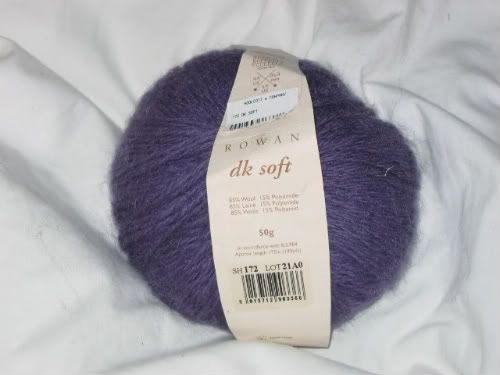
Knitters in dry climates who’ve felt cheated when their 100g balls of yarn only weighed 90g can take solace if their yarns were milled in a more humid environment (this happened to a few people I knew in Colorado). Rowan’s not cheap, Scotland’s just wet.

Posted in competition, jacob, Spinning | Leave a comment

My visit to Laurentian Alpacas

It was just about a year ago that I took my camera, checkbook, and a printout from Google maps and headed for the Laurentian Mountains in Québec. I was starting to get the idea for my Spin Off article, and figured it was time to visit a farm I suspected was one of the better places to get alpaca fleece in this part of the country. Laurentian Alpacas is about an hour north of Montréal and a good three hours from Ottawa via narrow roads with lots of blinds turns and province-posted signs reminding drivers that “this is not a racetrack.” The countryside was beautiful especially as I got further from the city and closer to the Laurentians themselves. It’s a funny thing how the human brain tries to find familiar patterns in new things– I’d never seen scenery like that before, but my mind kept searching for little similarities to the Rockies, the Black Forest, Western Massachusetts, whatever. When I was in Russia several years ago, I remember several fellow West coasters remarking that the hills around the village where we stayed looked just like the landscape in Northern California. This photo reminds me a lot of particular highway in Colorado and looking at it I can almost imagine that behind that little ridge, huge granite peaks will come into view.

Laurentian Alpacas occupies a lush, hilly piece of land in Sainte-Marguerite-du-lac-Masson. As soon as I got out of the car, I was greeted by and hit it off with Jane Orrom, one of the owners of LA. It was refreshing to meet an alpaca owner who understands the importance of good genetics and breeds for animals with exceptional fleeces. It seems like it should be obvious that alpacas, being fiber animals, should be bred for fine fiber, but inflated prices mean the animals themselves are often the moneymaker, not the fleece they produce. A $20,000 alpaca might only produce $200 worth of fleece every year, which has led some breeders to neglect fiber quality in their herds. Fortunately, farms like Laurentian Alpacas strive for excellent fiber in their animals and as a result produce outstanding fleeces.

As you can see from the photos below, I had missed shearing time and in fact almost all of the farm’s fiber had been sent to the mill a few days before. It was terrible timing as I’d planned to buy a full fleece on my trip, Jane showed me some samples and promised me the first pick of the 2010 fleeces (two of which will soon be on their way to me in the mail).

This group approached me suspiciously, humming as alpacas do when they are nervous. They were curious, though they always kept just out of my reach.


Herdsire Viracocha, in his own barn.


I did buy some roving that she had, as well as yarn, with each skein consisting of fiber from a single animal (a brilliant way of keeping track of fleece quality for each animal every year). Zodiac and Churi were the sources of the roving and the yarn, respectively:

My visit felt way too short and I promised to return, which hasn’t happened yet but I have hopes for in the near future. I passed along the farm’s information to Ariadne Knits, who now stock their “single-origin” skeins, and have stayed in touch with Jane. The next time I can swing a 6-hour round trip, I think I’ll be back for a visit.

Evening sky, after my visit, down the road in Saint-Sauveur

Posted in Spinning, travel, writing | 3 Comments

The many uses of silica crystals

I wanted to enter a skein at Taos this year, specifically the second skein of Jacob wool that didn’t turn out quite the same as the first.


The two skeins, with the slightly finer-spun one in front.

I was quite excited to get my skein all ready to go, but then I saw the weight was about 2.25 oz. This is a problem, as the competition limit is 1.5-2 oz. I could always cut the skein, but that might affect its consistent stripes.

Then I remembered that wool can absorb a good deal of its own weight in moisture from the air before feeling damp. I’ve read anywhere from 20%-40%, but haven’t seen a real scientific reference for any figure I’ve seen quoted. However, the difference in humidity between dreadfully muggy eastern Ontario and arid northern New Mexico might be enough to drop the weight of the skein below the 2 oz. limit once it arrives. Just in case, though, I’ve decided to see how much weight it loses in the presence of a desiccant.

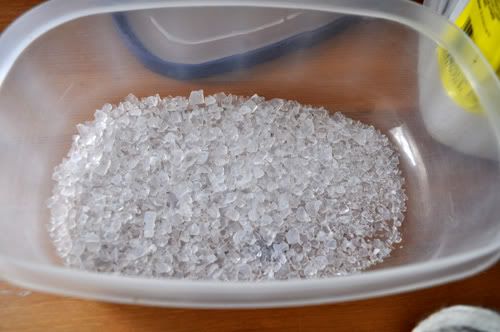
Silica crystals are what’s in those little DO NOT EAT packets in shoeboxes and vitamin jars. They can also be used for drying flowers, keeping moisture from ruining gunpowder or underwater camera housing, and even as kitty litter. I spread a layer in the bottom of a tupperware container:

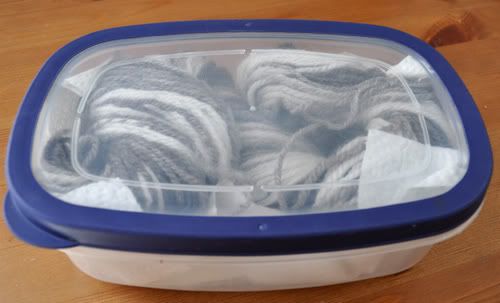
I threw a paper towel on top to keep the crystals from sticking to the yarn and sealed it up. I’ll check the weight again in a few days and see if it made any difference:

Posted in competition, jacob, Spinning | 4 Comments

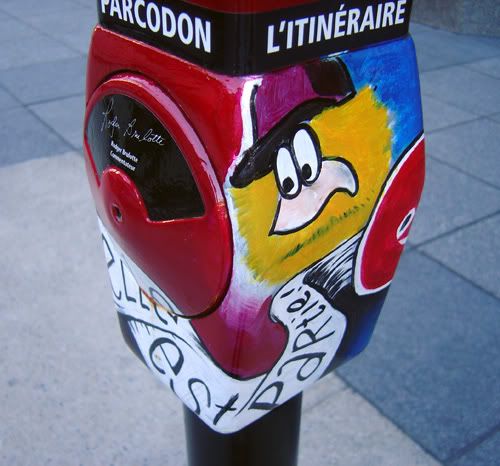
ParcoDon #13

Like many cities, Montreal has recently stopped using traditional parking meters in favour of a “Pay and Go” system. Denver and San Francisco use their old parking meters as a way to collect funds for charities that benefit the homeless (to discourage panhandling while still helping out those in need, though the idea has its critics). Montreal does the same though it recently took it a step further.

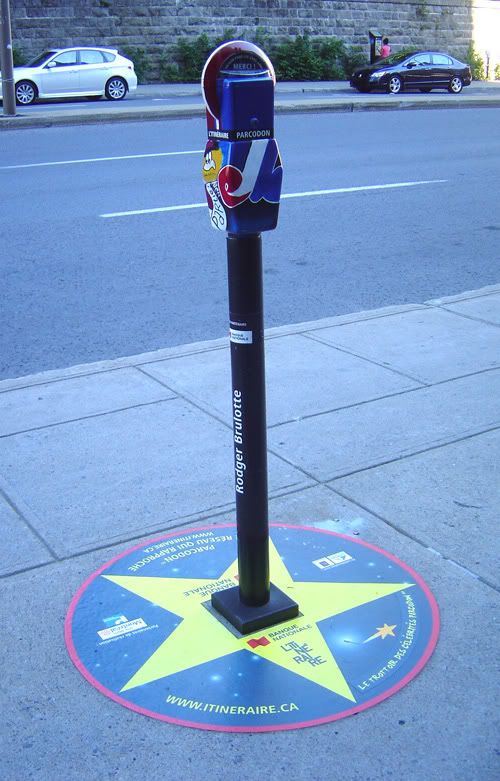
To draw attention to the ParcoDon meters, the city called on celebrities and well-known organizations to “adopt” and decorate a meter. Scattered mostly around the downtown area, there are 70 colourful meters that are fun to spot. Last weekend I found MLB commentator Roger Brulotte’s meter, south of the Bonaventure metro:

The image of Youppi commemorates the departure of the Expos in 2004–I’d rather watch baseball than any other sport, so I’m clearly in the wrong country:

Posted in charity | Leave a comment

Sheep to shawl in Dunvegan

Looking back through archived newsletters from the Ontario Handweavers and Spinners, I see that a number of smaller guilds in the province have closed or merged in recent years due to dwindling membership. In most cases it’s a case of old age among the remaining members, and not long ago it looked like the Twistle Guild of Glengarry would go the same way.

The Twistle Guild recently held a Sheep to Shawl event at the Glengarry Pioneer Museum in Dunvegan. As the name suggests, it’s where spinners and weavers team up to take freshly shorn fleece and turn it into a shawl in a single day. I was teaching down the road in Casselman that day and went my class was over I decided to check out the activities.

One of the eponymous sheep of the event:

It was alternating between torrential raining and not, so most of the spinning wheels were tucked in close together under a small tent:

Between showers:

This museum employee laughed when I pulled out my camera just after she took a photo of me:

I really liked talking to the guild members, who reminded me of some of the incredibly knowledgeable people I knew in my guild in Colorado (with a similar tendency to comment on my young age). They told me that until a couple of years ago the entire membership was between 70 and 90 years old, but that some young people in their 20s and 30s had recently started to join. The guild seems to be doing pretty well these days and now convenes at the museum every Friday to spin together. It’s nice to see members with decades’ of experience and information able to share their skill with younger people interested in continuing the craft. A friend of mine from Montreal was also there that day and shares her thoughts here.

Posted in competition, Spinning, teaching | 1 Comment

Skein competition how-to, Part 4: Tags and mailing

Most competition require skeins to have identification tag of some kind, listing both the entrant’s contact information as well as preparation and spinning details. This serves two purposes: one is the obvious way to keep track of who submitted what skein, but the other is so that the judges are aware of information that may affect their decisions. For example, if it’s a close competition between two equally well-spun skeins, the fact that one was prepared by the spinner from raw wool may give it an edge over the other spun from commercially prepared fiber.

Different competitions have different requirements for how the tags should look and what information they should contain, so it’s best to read the rules carefully. Many competitions, however, follow the following format:

On one side of a 3 x 5 index card, write the spinner’s name, address, phone number, and/or e-mail. On the other side, write the class number, fiber type, number of plies, length of the skein in yards, spinning technique (e.g., short forward draw), and any other details that pertain to preparation or finishing. If you prepared the skein from raw wool, be sure to note that including whether the wool was combed, carded, etc. I write my finishing techniques as well (rinse in cool water, hang unweighted to dry). Unless the rules say otherwise, I affix the tag to the skein using coordinating yarn around one of the ties. Here’s one of my tags from this year, looking a bit worse for wear after two cross-border mailings, but it’ll give you the idea:

If you’re like me and live in an area with no skein competitions, you’ll have to rely on those that accept mail-in entries. Again, pay close attention to the rules as some specify a particular carrier for returning the skeins to you– usually, it’s Priority Mail but I’ve also seen UPS. With your skein, you will want to include return packaging with enough postage to cover the weight of your skein and any ribbons or awards. MA Sheep and Wool gives a ceramic cup or plate to the best in show, something that would definitely influence the kind of packaging and postage you include with your skein. Don’t forget to include your entry form and any fees, and if you have any questions it’s best to contact the competition organizer ahead of time.

As this is the last in my skein competition series, I’d like to say thanks for reading, and good luck with your entries! I’ll also point out that Finger Lakes Fiber Arts Festival has several awards just for novice spinners this year and will give lots of good feedback on submitted skeins. If you have any questions about how to submit your skein for any competition, please feel free to leave a comment.

Posted in competition, skein competition how-to, Spinning | Leave a comment

Skein competition how-to, Part 3: Presentation

While the majority of points in a skein competition are reserved for technique, presentation points can mean the difference between 1st and 3rd place, or a ribbon and none at all. While it may seem picky to judge on presentation, it does make sense. A neat and orderly skein is easier to examine than one that’s one the verge of tangling, and skeins of a uniform size look a lot better on display at a festival than a haphazard collection of short and long skeins. Your skein should conform to the requested circumference (often 2 yards, though 1 or 1.5 isn’t uncommon), be tied in 4 places (I lost points this year for tying in 3), and be rinsed or washed to bring out the true twist.

Here I’m winding a 2-yard skein, using an 18″ (1/4 of 2 yards) central bar in my niddy noddy. I start by holding the free end in the middle of the bar and passing the yarn up and over the top right arm:
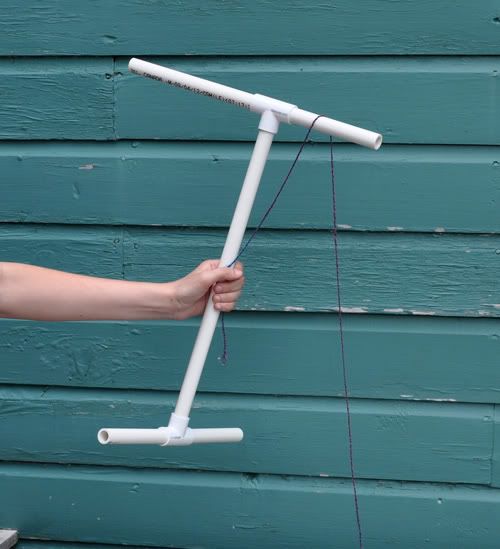
I pass the yarn down below the back bottom arm, and up again over the top left arm:
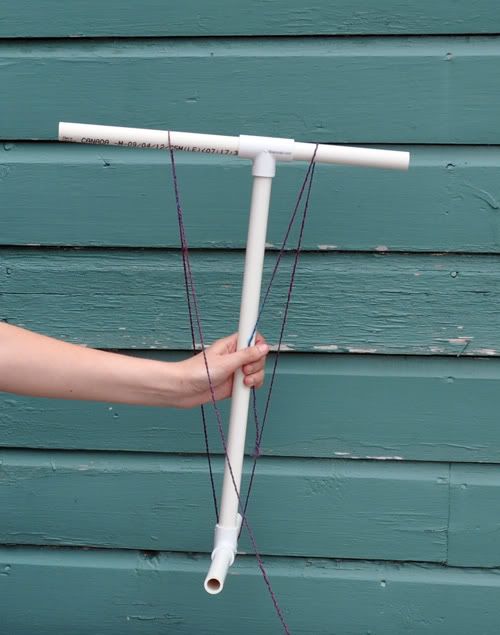
I then pass the yarn under the bottom front arm band and up over the top right arm again:
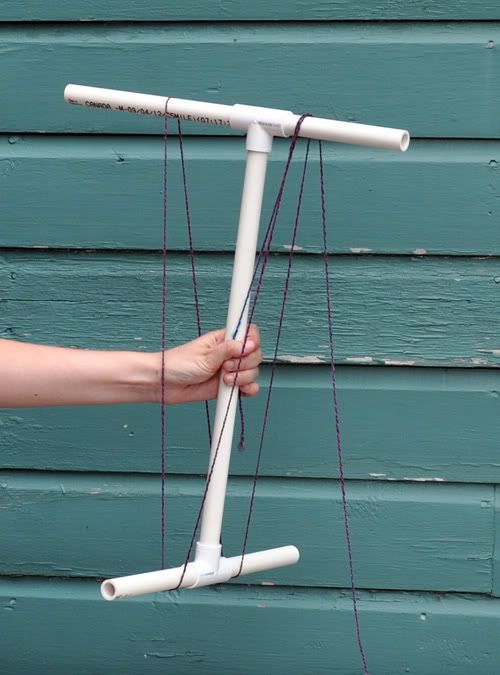
I repeat this until I run out of yarn:
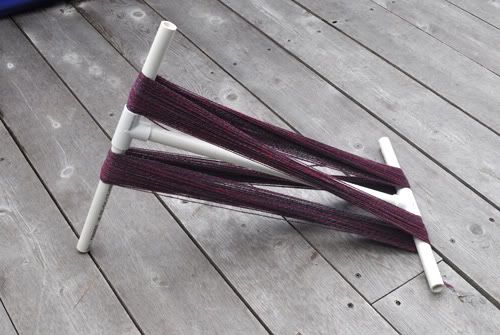
This is also a good point to measure the skein by counting the number of strands and multiplying by 2 yards (or whatever the circumference is). I then tie the two ends together and trim the free ends to about a centimeter in length:
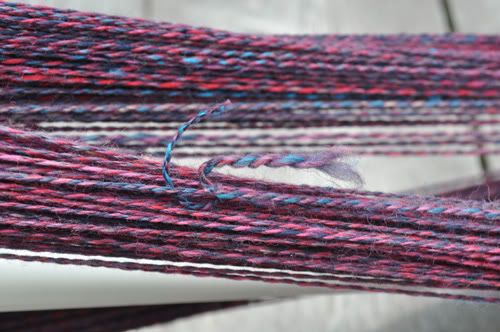
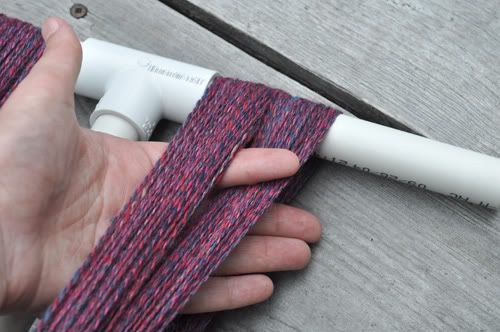
Next, I place my first tie. The ties should coordinate with the yarn and be strong enough to hold the skein together, if possible they should be pieces of the yarn itself unless otherwise noted in the competition rules (e.g., Maryland Sheep and Wool asks for ties made of “fine string” — I used embroidery thread). If your yarn is very delicate, such as a low twist singles, it’s best to use a stronger yarn of a similar color. I start by dividing the strands of yarn roughly in the middle with my finger:
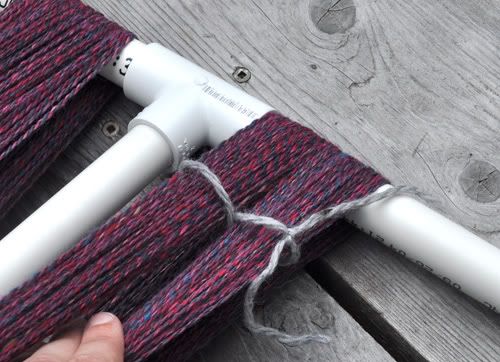
I thread a piece of yarn (shown here in a contrasting color so it’s more obvious) over and under the 2 sections to make a figure-8 tie. The tie should be a little bit loose to allow the strands to slide easily. Tie the ends in a knot and trim to about a centimeter.
Space the other three ties evenly throughout the skein. Some people slide their finger between the 2 sections to divide the skein at exactly the same point for each tie; I find this hard to do on a niddy noddy and I’m not sure it makes much of a difference anyway (anyone with skein competition experience who can comment on this?). If you do want to divide the skein at exactly the same point, it’s easier to do if you take it off the niddy noddy first. Once your skein is securely tied in 4 places, you can remove it:
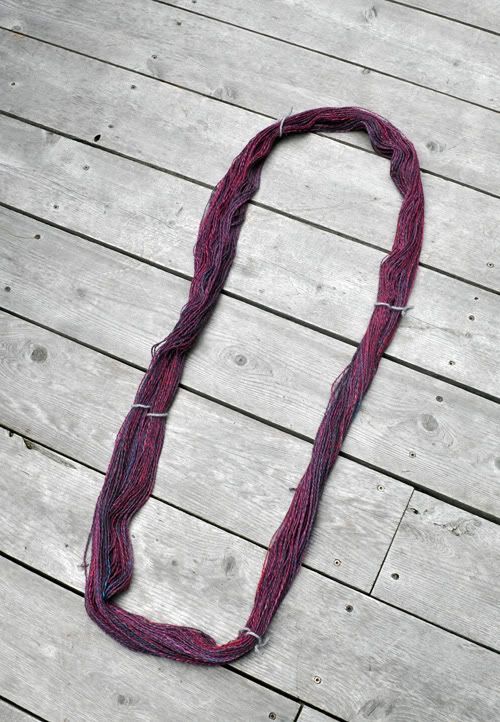
At this point, I would finish the skein by rinsing it in cool water and allowing it to hang dry, to set the twist. I would then wind and tie the skein a second time, and then it would be ready for competition. I hold my thumb through one end of the skein and twist the other end until the whole thing twists back on itself, finally tucking one end through the other:
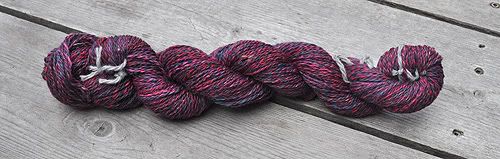
The skein is now ready to go, save for a tag and mailing materials, if needed. That will be the subject of Part 4–see you next Sunday!

Posted in competition, skein competition how-to, Spinning | Leave a comment