Quilting, version 2

Every year at Wellesley, I was one of the small group of students who stayed on campus over the winter break, having the chore/pleasure of cooking my own food in the dorm basement kitchens and finding ways to keep from being bored over a month of cold and snowy days. At the time of my studenthood, there were several non-credit “fun” courses offered as well, usually meeting once a week and covering topics from Shakespeare to wine tasting to book binding. Unfortunately for current students, there are no more Wintersession courses on campus (but if you have a few thousand bucks sitting around and proficiency in one or more of a handful of popular foreign languages, you could spend the month abroad–they had this when I was there too, but I was severely lacking in the former requirement). So I’m glad I was able to participate in these classes, especially the one I took in 2002.


Taught by an admin in the Religion Department, “The Gentle Art of Quilting” was designed to teach all the skills needed to make a quilt over the course of four sessions. Above is the mini-quilt I made, proving that I have what it takes to make the real thing, minus the time/commitment. Since that very enjoyable course, I have made exactly zero full-sized quilts, having focused my sewing energy on skirts, bags, and other small, more manageable pieces.

And yet I’ve never lost the desire to really get into quilting, so when a fellow alum put up a post on Facebook looking for other Wellesley quilters to take part in a quilt-a-long, I quickly responded. She offered to send me some fabric scraps to get started, and yesterday I received this:


Around a kilo of novelty fabric bits, just begging to be cut into small finicky pieces and sewn together. A lot of them are animal-themed, and I plan to mix them with several of the animal fabrics I already own, in a disappearing nine-patch pattern. I have faith that this quilt will happen because a) I now own a sewing machine (hand-piecing that mini-quilt was SLOW), and b) I have the added motivation of quilting at the same time as someone else, even if she is on the other side of the continent. In true Wellesley fashion, we’ve discussed making a bigger project out of this, eventually involving multiple alums–we’ll see where that goes. For now, time to dust off the rotary cutter and get started.

Posted in quilting, sewing | 3 Comments

The old stand-bys

I’m a slow knitter, for two reasons: 1) I tend to have a lot of things going on that fill what could be otherwise used as knitting time, and 2) I do a lot of work with my hands and a repetitive strain injury could set me back in a lot of inconvenient ways. So, I don’t have quite the output of finished knitted objects that, say, some of my friends have.

As a result, I rarely knit a pattern more than once (despite my habit of remarking on what I would change to a pattern, were I to knit it again). If it’s going to take me a season to knit a scarf, I’d like to at least get a feeling of novelty for the next one.

All of that being said, there are a few patterns I’ve gone back to several times, and I don’t mean reknitting the same sleeve four times until it fits. I do a lot of my knitting these days either on public transit, or in dimly lit hospital auditoria–both places where it can be difficult to look at instructions, so memorized patterns have a real advantage. There are also patterns that produce great gifts, with reliably positive reactions from the giftees. And well, some patterns are also just fast.

Here are my three stand-by knitting projects–fast, easily memorized, and appealing. In fact, I’ve knit these so many times I don’t even have recent photos–I tend to do FO shots of the first one and skip the incessant urge to visually document the rest. Some of these go back several years (all the way to my old Colorado apartment):

Cartridge-belt rib scarf:


Cartridge-belt rib is not a true rib, in that it doesn’t have horizontal elasticity, but its vertical lines give it a strong resemblance to other forms of ribbing. I like this stitch pattern because it’s soft, reversible, dense, and pretty gender-neutral. It’s made a few nice and warm scarves over the years.

Christine’s Stay-On Baby Booties:


Being of the age where new babies are rapidly popping, quark-like, into existence into my social/family circles, I always find it useful to have a stash of them on hand as gifts. This pattern is quite simple, looks cute, and apparently is damn near impossible for babies to pry off their own feet. Great way to use up leftover fine yarn, too.

Mother Bear Project Bears


I’m not sure how many bears I’ve knit for the Mother Bear Project over the years. Let’s just say, a lot. I’ve adapted the (very easy, very memorizable) pattern a few times, so that I can now knit them in the round and avoid seaming, and do raglan-style arms for a change once in a while. When I amass a few, I put them all in a box and ship them off to MBP.

What are your favourite patterns to knit more than once? Or do you always knit something new?

Posted in Knitting | 1 Comment

Giveaway at The Blue Brick

My good friend Shireen is giving away two copies of her lovely new book on making resin jewellery. I have to admit that I’m biased as I had a hand in its production, but my opinion is at least informed when I say that it’s an accessible, thorough, and beautiful introduction to resin.

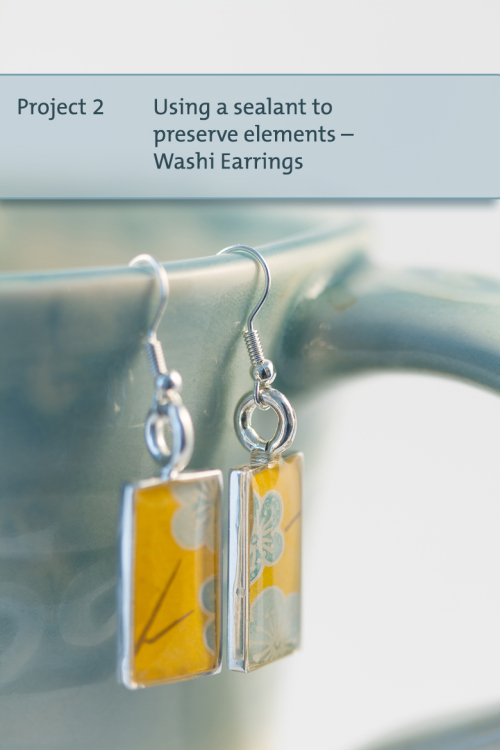
The earrings above are one of the projects in the book, made with Japanese washi paper. This very pair is now in my possession and they make me delightfully happy to wear them. Visit The Blue Brick for your chance to win a copy of the book.


Posted in Uncategorized | Leave a comment

Late summer travels

School starts again tomorrow, so I’m glad to have spent the end of my summer relaxing in Montreal. I worked on some embroidery, taught myself how to crochet, and did a lot of lazing around in the parks of the Plateau, Mile End, and Outremont. Now that I’m back in Toronto there’s a definite crispness to the air; fall is around the corner.


Posted in embroidery, spindle, travel | Leave a comment

experiment

This is really just a test to see if I can post from my phone, as I’m settled in a park in Montreal with a beer (and wisely, no knitting). I washed the skein above, possibly permanently dyeing my bathtub as well, and it turned a dusty rose colour. Bad camera phone photo below:

Posted in Uncategorized | 2 Comments

Dye, dye my darling

(With apologies to the Misfits.)


After 12+ years in fibre arts–dabbling (and serious study) in spinning, knitting, weaving, crocheting, and more–I’ve never really gotten into dyeing. Always one to ruin a good time with an alarming medical anecdote, I’ve stuck to pursuits that don’t involve potentially inhaling toxic particulates and turning my kitchen into the equivalent of an EPA Superfund site. That’s a bit of an unfair exaggeration, of course, as dyeing fiber can be done pretty safely at home with a few precautions, but nevertheless I’ve done more reading and writing about dyeing than actually doing it for myself (childhood/adolescent experiments with tie-dye notwithstanding, of course).

Then my friends suggested putting their stash of Kool-Aid, Rit, and vegetable dyes to good use, and somehow we all ended up in Shireen’s kitchen, wearing dust masks and gloves, ruining her cooking implements for good and having a great time in the process.


(Nitrile gloves? Check. Labelled dye mixtures? Check. Old pyjamas? Check.)

Dyeing is basically the act of taking dye molecules and convincing them to form bonds with willing molecules on the fiber itself, usually with the help of water and heat. There are dyes designed to work on wool and other protein fibers, dyes that work best on cotton and other cellulose fibers, and dyes that will accomplish the difficult task of adding colour to synthetic materials (note: don’t try this last category at home, unless you live in a well-appointed organic chemistry lab).


We started off using Kool-Aid, which contains acid dyes in the form of food colouring. These will dye wool, with somewhat unpredictable results due to the mixture of colours in each flavour. It’s a fairly easy and reasonably safe way to try out dyeing, and we each dyed a skein in Kool-Aid before trying out Rit.


Rit is an “all-purpose” dye, meaning it’s a mix of chemicals that will dye either wool, or cellulose. (Exactly what those chemicals are is not disclosed by the manufacturer, which is a little troubling.) It’s a bit wasteful if you’re dyeing a single fiber–in our case, we were only working with wool, so the cellulose-dyeing component happily washed away in the final rinse(s). We got some nice results, but I think we’ll go for regular acid dyes next time (and there will be a next time).


My absolute favourite dye turned out to be the vegetable dyes. We used a kit from Blue Castle Fiber Arts, which contains several dye blends, an herbal mordant (a substance needed to facilitate the bonding of dye molecules to fiber, usually a metal salt but here a plant extract), and instructions to walk you through the somewhat tricky process. I wrote about indigo and other vegetable dyes for Interweave a few years ago and have since been fascinated by the process, but I was surprised with how much I loved the results. It’s more difficult, more time-consuming, and less predictable than using synthetic dyes, but the finished results show a depth of colour that you just can’t get with other dye methods.


(From left to right: Rit, indigo, and madder/soapnut.)

I’m eager to try this again, especially with more of the vegetable dyes. I may try a low-toxicity metal mordant (alum) next time to see how it compares to the plant-based mordant. I’ll want to give acid dyes a go as well. And I’m curious to see how the colours hold up to light and repeated washings–I have high-ish hopes for the vegetable dyes, not so much for the Rit. That chocolate-coloured skein on the right is mine, and it’s destined to be a shawl/wrap–more posts to come as that takes shape.

Posted in dyeing | Leave a comment

FO: Hey Hey, My My


Compared to my progress on other knitted items, my version of Reiko Kuwamura’s Hey Hey, My My went by very quickly–I started it in April, worked on it mostly in June, and cast off last week. Already improvement over the year and a half I took to make the Rocky Coast Cardigan.


Hey Hey, My My is beautifully designed. It’s top down, with a cleverly structured yoke, and no seaming. I can’t say I enjoyed doing blackberry stitch in cotton yarn (nor did I get much out of the acres of stockinette), but there’s a certain satisfaction when a pattern comes out really well. I modified the pattern by making the sleeves short and if I were to knit it again (the old refrain), I’d move the decreases to the sides so they don’t show as much.


It’s comfortable, cool thanks to the cotton yarn, but substantial enough to wear this fall. Thanks to Shireen, as usual, for the lovely photography.

Posted in cotton, finished object, hey hey my my, Knitting | Leave a comment